
Key Takeaways
- Sensory activities support emotional well-being and calm for memory care residents.
- Touch, sound, scent, and taste can all spark positive feelings and recognition.
- Personalized sensory programs help reduce anxiety and strengthen caregiver connections.
- Consistent daily routines bring comfort and predictability to residents.
- A good memory care community tailors activities to each person’s unique history and needs.
Why Sensory Activities Matter for Your Loved One
When a loved one is living with memory loss, it can feel hard to know how to connect with them. Conversations may be more difficult, but the senses can provide another way to reach one another. A familiar song, the smell of fresh bread, or the feel of soft fabric can bring comfort or encourage a response when words don’t come easily.
That’s the value of sensory stimulation for people in memory care. Activities that involve touch, sound, scent, taste, and sight can create familiar, purposeful experiences throughout the day. More importantly, they give families and caregivers additional ways to connect with the person they know and love.
The Benefits of Sensory Stimulation for People in Memory Care
Sensory activities don’t need to be complicated to be meaningful. Something as simple as listening to a favorite song or working with familiar objects can invite participation without placing pressure on someone to remember names, dates, or details.
Depending on the person and activity, sensory stimulation can:
- Create opportunities for meaningful engagement
- Support a comfortable, calming environment
- Encourage connection with family members and caregivers
- Draw on familiar experiences and personal history
- Provide opportunities for choice and participation
- Add variety and purpose to everyday routines
The best activities are personal. Paying attention to what your loved one responds to can help you find experiences that feel comfortable, familiar, and worthwhile.
5 Sensory Activities for People in Memory Care
There’s no single sensory activity that will appeal to everyone. A person who spent years gardening may respond differently than someone who loved cooking, music, art, or working with their hands. These five types of sensory activities offer plenty of room to adapt the experience to the person.
Touch and Texture Activities
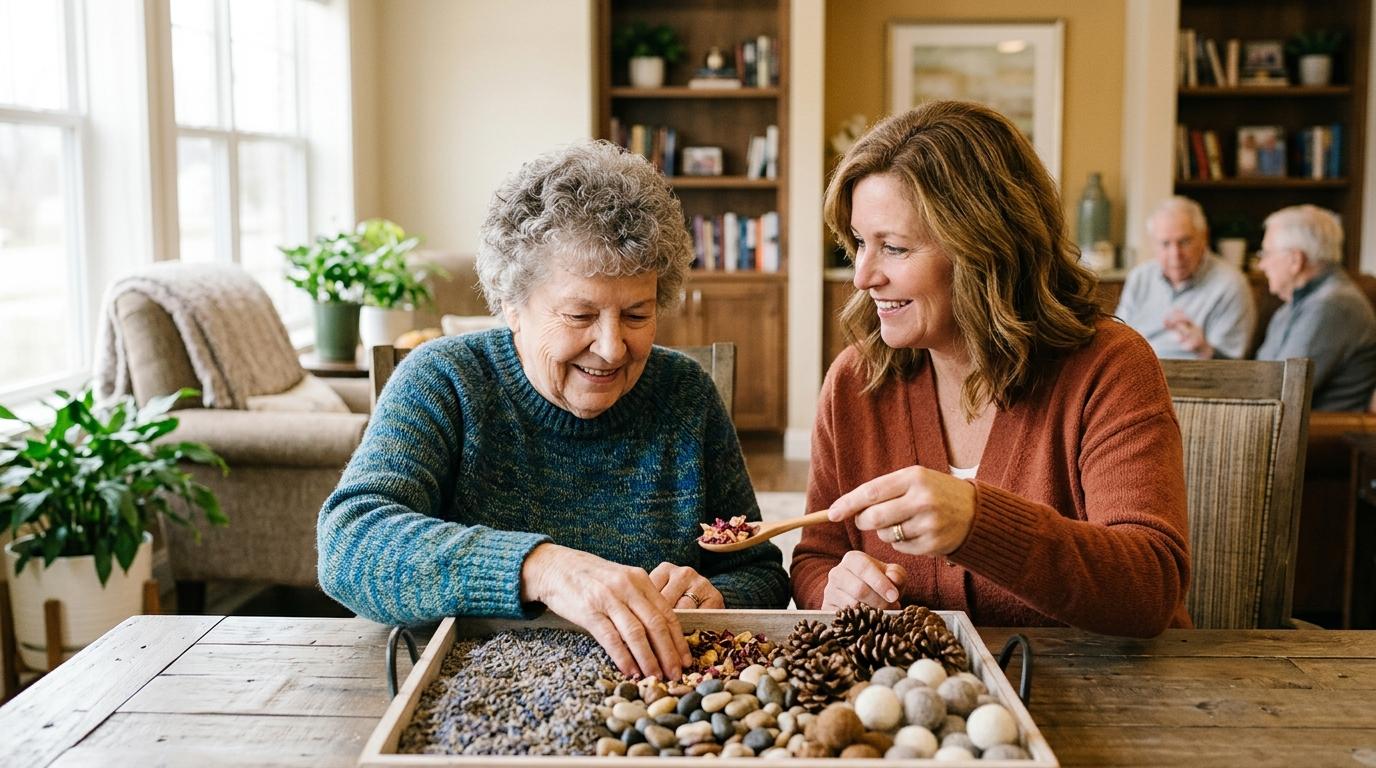
Folding warm towels, working with clay or dough, handling smooth stones, or sorting familiar objects can engage the sense of touch while giving the hands something purposeful to do. Gardening can also incorporate different textures through soil, leaves, flowers, and gardening tools. The goal isn’t to complete a task perfectly; it’s to offer an activity that feels comfortable and familiar.
Music and Familiar Sounds
A favorite song can sometimes connect with a person even when conversation has become difficult. Playing familiar music, singing together, listening to nature sounds, or simply tapping along to a rhythm can provide an easy way to participate. Families can make the experience more personal by choosing music connected to important periods, traditions, or interests in their loved one’s life.
Scent-Based Activities
Familiar scents can add another layer to everyday activities. Fresh flowers, herbs, a favorite lotion, or the aroma of something baking may be recognizable even when a person can’t put the experience into words. Pay attention to personal preferences, since a comforting scent for one person may be unpleasant or overwhelming for another.
Food and Taste Activities
Food can bring several senses together at once through taste, smell, texture, and appearance. Depending on a person’s abilities, an activity might involve stirring batter, smelling fresh herbs, tasting a familiar treat, or talking about a favorite family recipe. Familiar foods can also provide a natural starting point for spending time together without relying entirely on conversation.
Visual and Creative Activities
Looking through photographs, arranging flowers, painting, or working with colorful materials can provide visual stimulation and encourage participation. Familiar photographs and objects may also give family members and caregivers something concrete to talk about with a loved one. Creative activities should remain flexible so the experience feels satisfying without focusing on the finished result.
The Benefits of Life in Memory Care
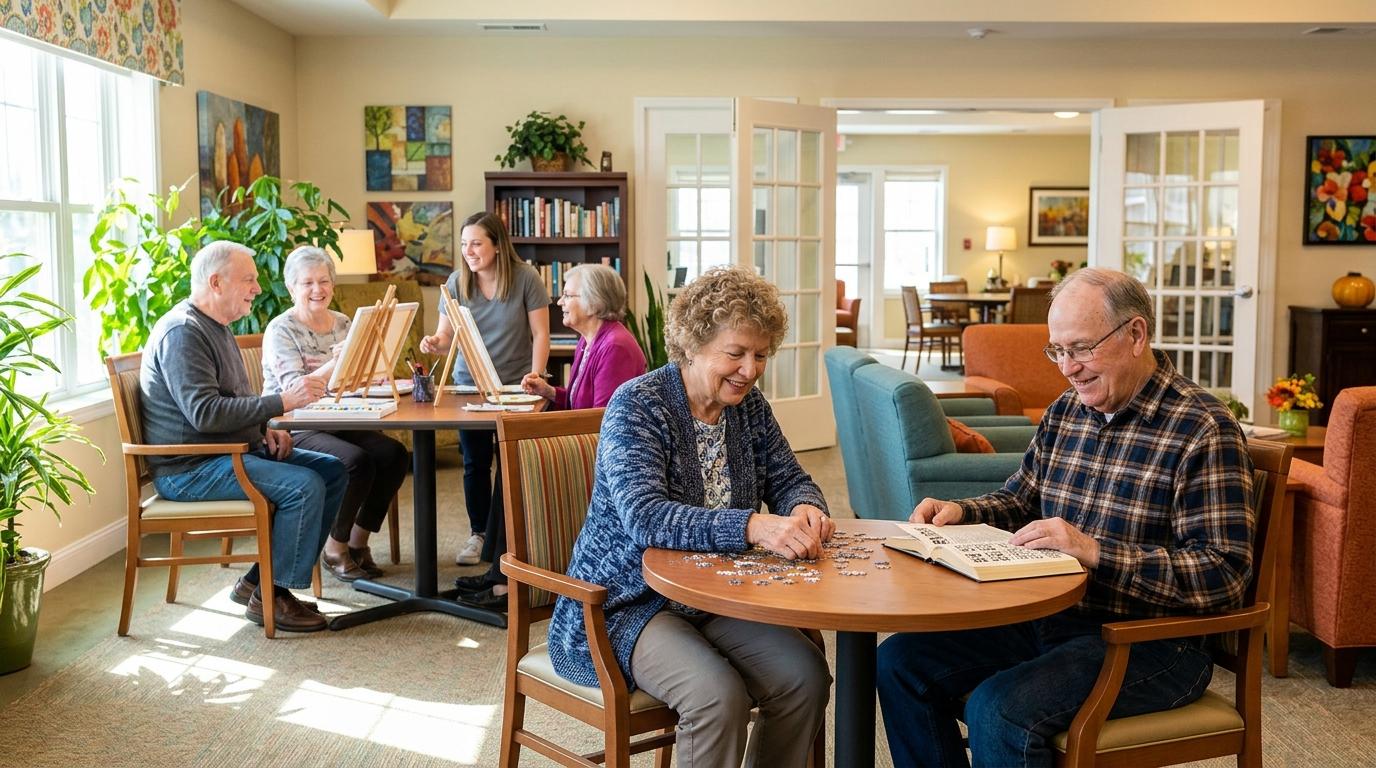
Families can bring many sensory activities into visits and everyday routines, but meaningful engagement is only one part of supporting someone with memory loss. A dedicated memory care community can provide consistent routines, personalized activities, and caregivers who understand how cognitive changes can affect communication and participation.
Personalized Activities and Daily Support
People bring a lifetime of interests, routines, preferences, and experiences with them into memory care. Learning that personal history gives caregivers a better foundation for choosing activities and adjusting support. Someone who once loved baking, for example, may find more meaning in working with familiar kitchen items than in an activity that has no connection to their past.
Consistent Daily Routines
A familiar daily rhythm can provide structure for people living with memory loss. Regular times for meals, personal care, activities, and rest can make the day feel more predictable while leaving room to respond to individual needs. Sensory activities can fit naturally within that routine instead of feeling like separate scheduled exercises.
Caregivers Who Understand Memory Loss
Memory loss can change how a person communicates what they need, want, or feel. Our experienced caregivers can watch for verbal and nonverbal cues, adjust an activity when someone becomes uncomfortable, and recognize when a resident is interested in continuing. This responsive approach respects the person rather than expecting them to adapt to the activity.
Memory Care at Sterling Pointe Senior Living
Sensory activities can be simple, but their meaning is deeply personal. A familiar song, favorite food, photograph, or everyday task can give someone living with memory loss another way to engage with the people and world around them. With personalized support and consistent opportunities to participate, those experiences can become a natural part of daily life.
At Sterling Pointe Senior Living in Princeton, our memory care approach centers on the whole person, with personalized care plans and programs that support emotional and spiritual well-being. We work to create a comfortable community where residents can find connection, purpose, and belonging while receiving the support they need. Schedule a tour of Sterling Pointe Senior Living today to learn more about our approach to memory care.